API Governance Fundamentals in Anypoint Platform
Learn the fundamentals of API Governance in Anypoint Platform, including designing APIs, applying governance rules, and ensuring compliance across the API lifecycle
Introduction
API Governance ensures APIs are designed and managed in a consistent, secure, and scalable manner across an organization. Without proper governance, APIs can quickly become inconsistent, harder to maintain, and prone to security risks.
MuleSoft’s Anypoint Platform provides a comprehensive set of tools to standardize API design, enforce governance rules, and monitor APIs throughout their lifecycle.
This blog walks through a practical implementation of API Governance, using a real RAML example to demonstrate how governance helps identify and fix common issues.
Before You Start (Prerequisites)
Before getting started, ensure you have:
- Access to Anypoint Platform
- Permissions for Design Center and Exchange
- API Governance feature enabled
- Basic understanding of RAML and API design concepts
Why API Governance Matters
Common Problems Without Governance
- Inconsistent naming conventions across APIs
- Missing or weak security implementations
- Different response structures for similar APIs
- Low reusability and duplicated efforts
Benefits of API Governance
- Ensures consistency across APIs
- Improves security through enforced standards
- Enhances reusability and discoverability
- Enables faster development with clear guidelines
- Maintains quality and compliance
Key Concepts (Simple Definitions)
- Ruleset → A collection of predefined checks (e.g., naming conventions, required headers, security rules)
- Governance Profile → A configuration that applies selected rulesets to a group of APIs
Implementation Steps
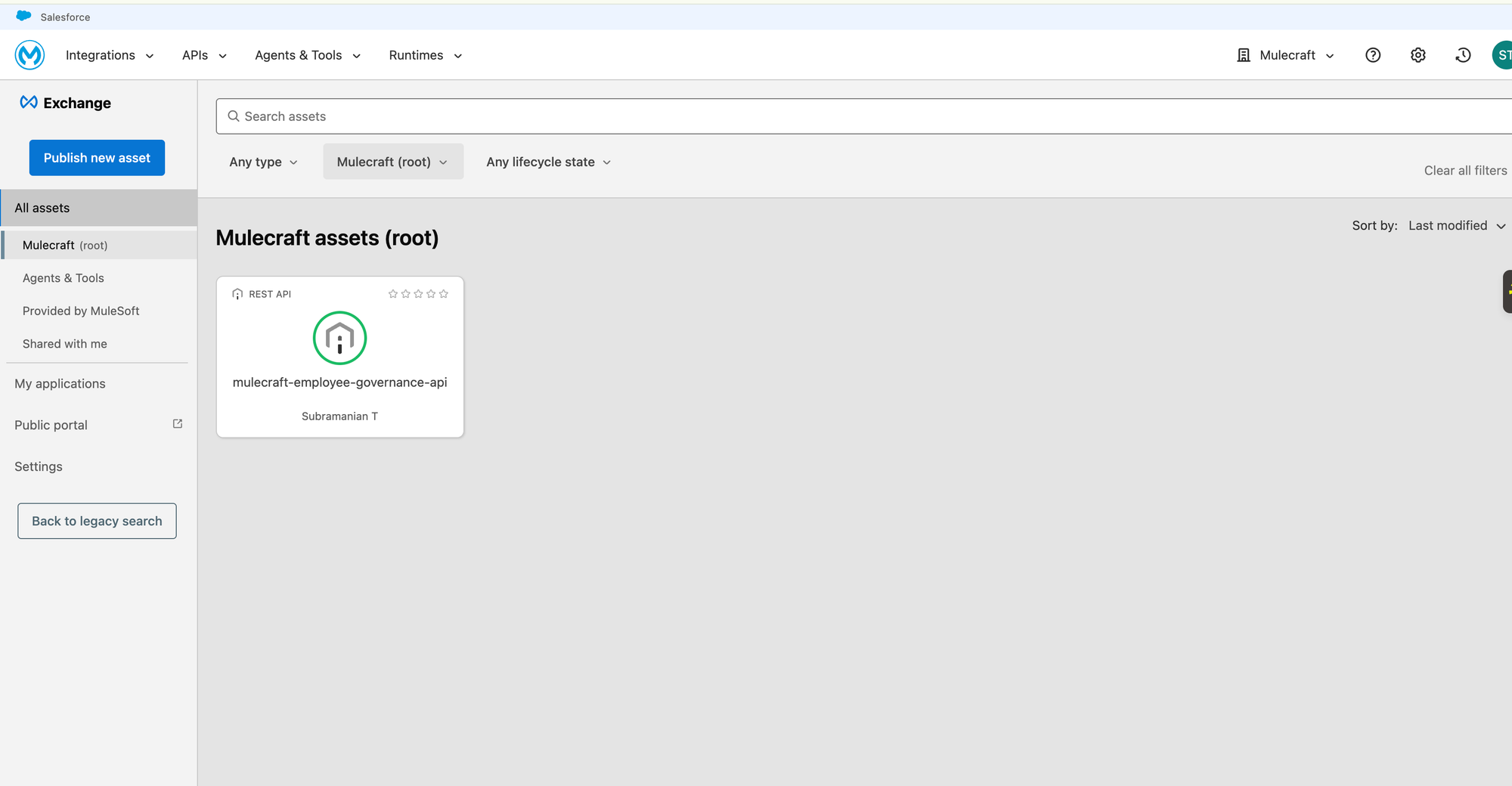
Step 1: Design and Publish API
Define your API contract using RAML and publish it to Exchange for governance and reuse.
Below is a simplified version of the Employee API:
#%RAML 1.0
title: Mulecraft Employee Governance API
version: v1
baseUri: https://api.mulecraft.in/api/{version}/employees
mediaType: application/json
protocols: [ HTTPS ]
securedBy: [ client-id-enforcement ]
/employees:
get:
responses:
200:
body:
application/json:
This API follows some good practices like using HTTPS, defining a global media type, and structuring resources clearly.
However, in real scenarios, governance rules may still identify issues such as:
- Missing Content-Type headers in responses
- Inconsistent naming (e.g.,
employeeidinstead ofemployeeId) - Missing response body for
POST (201) - Incomplete error handling
These issues are not always obvious during development but are automatically detected through governance.
Step 2: Navigate to Governance Console
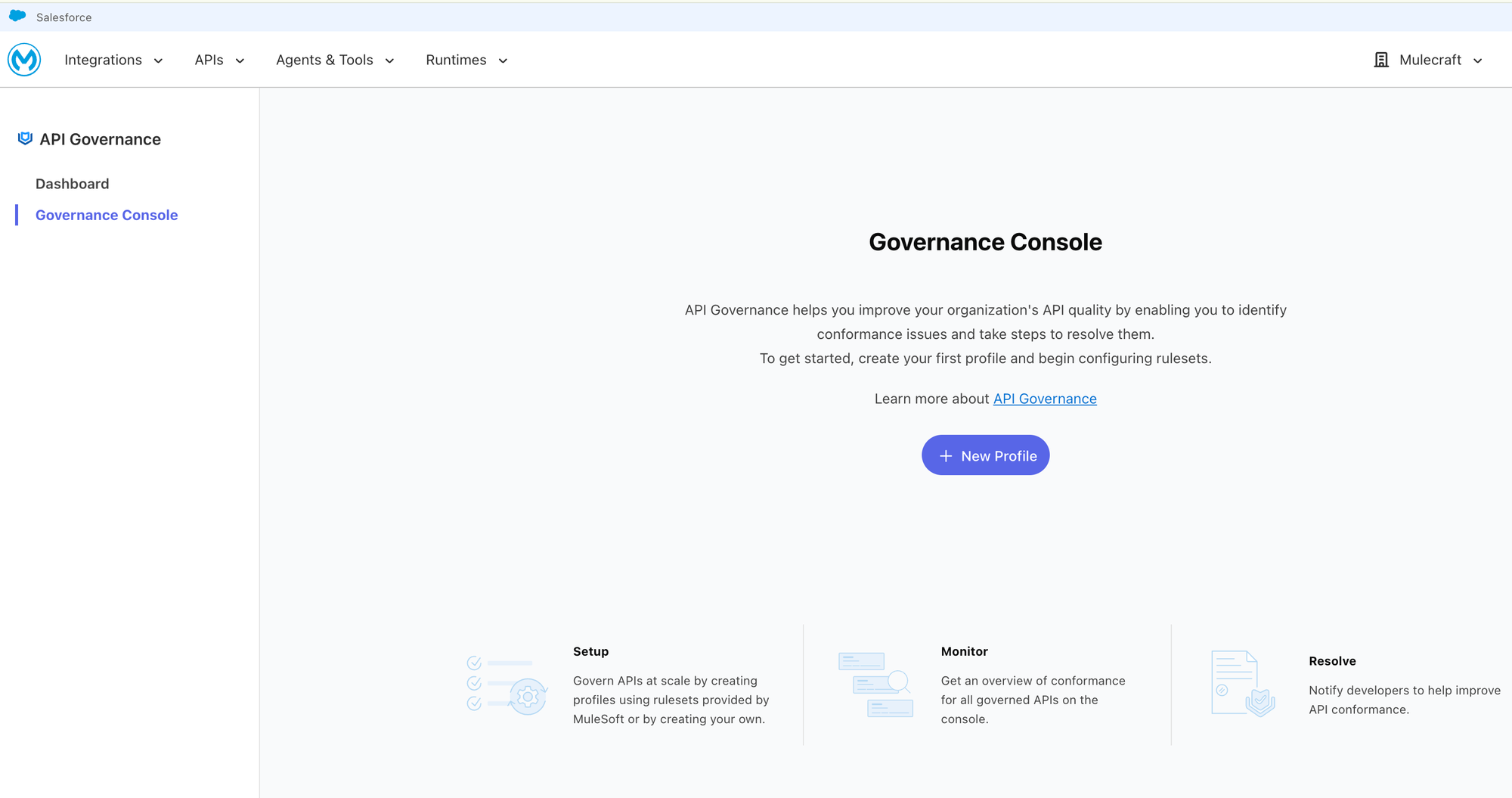
Access the central place where governance rules are configured and monitored.
- Go to API Governance in Anypoint Platform
- Open the Governance Console
This console provides visibility into API compliance and allows you to manage governance configurations.
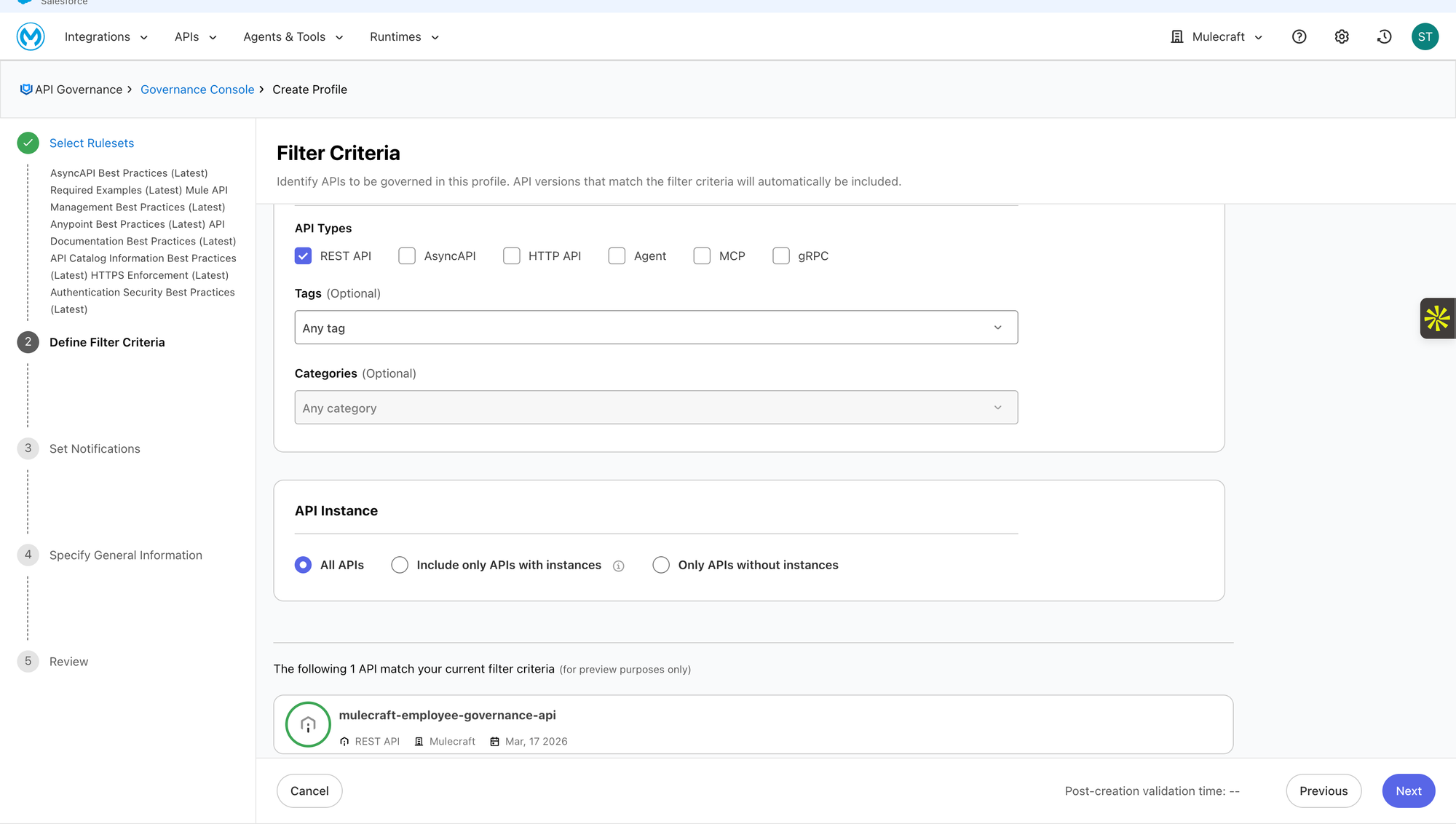
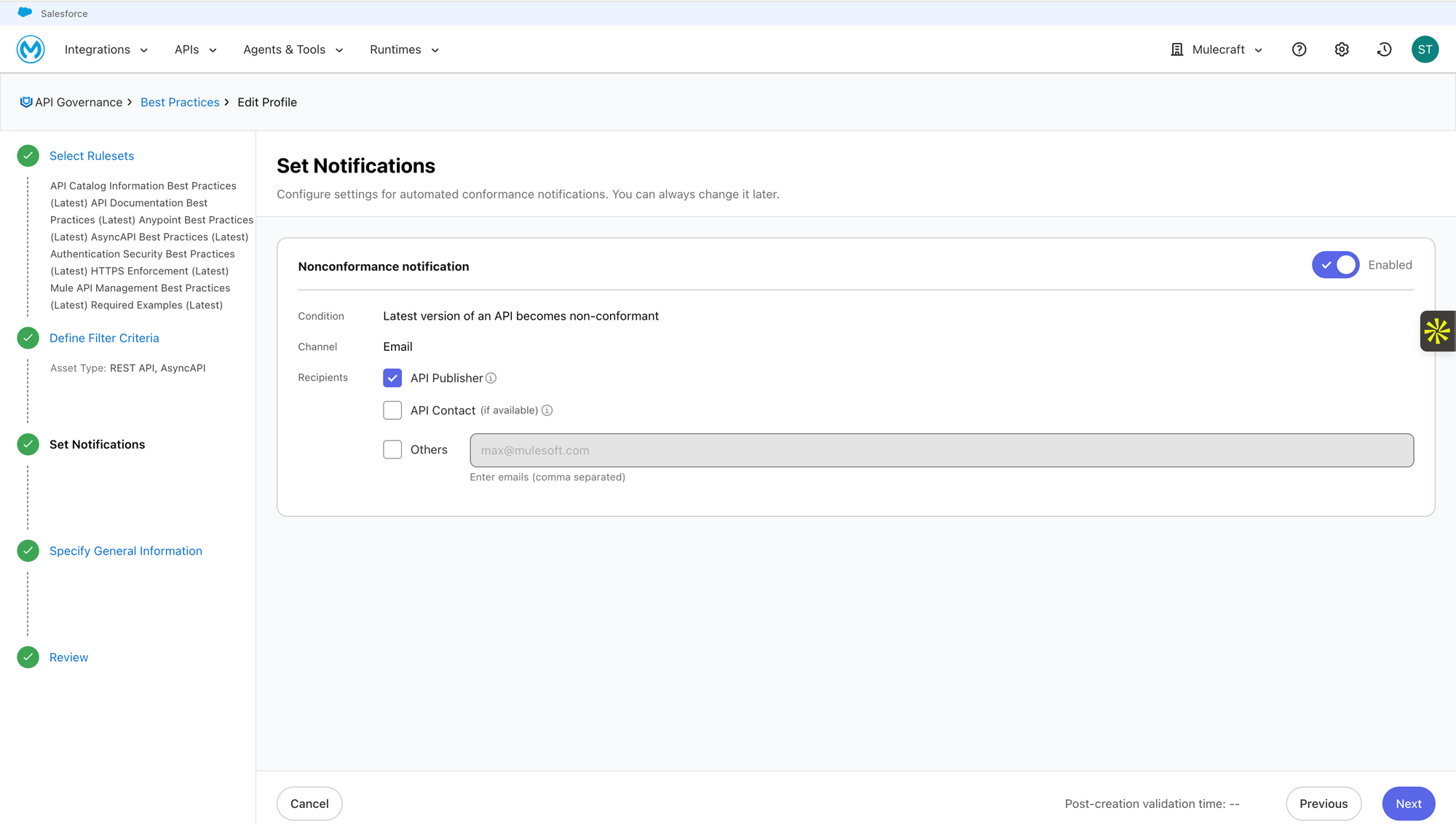
Step 3: Create a Governance Profile
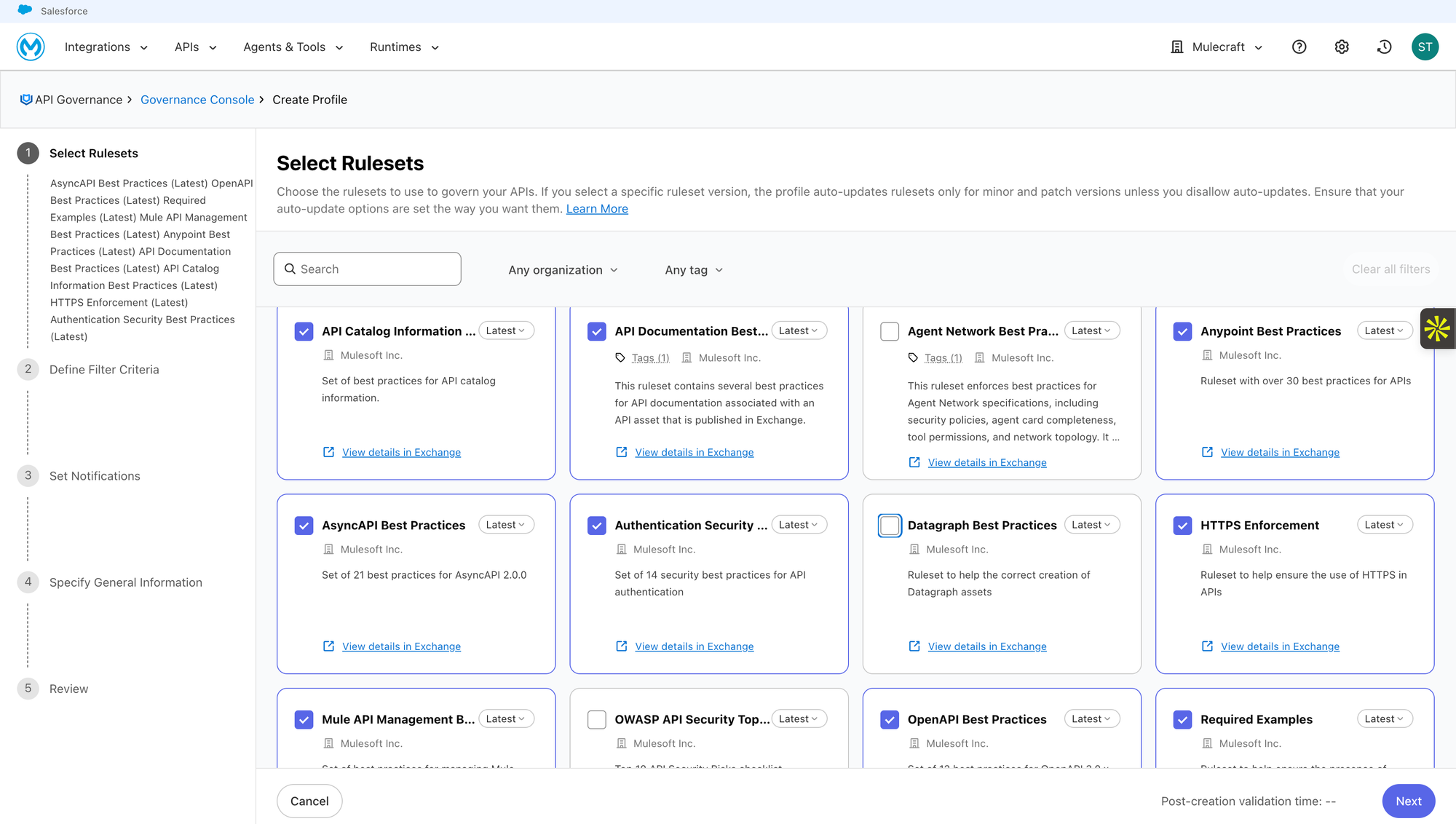
Define how governance rules are applied to APIs.
- Create a new profile
- Provide name and description
- Select relevant rulesets
- Configure filters (e.g., business group, tags)
You can also decide how strict your governance should be:
- Strict rules for new APIs
- Flexible rules for existing APIs
Step 4: Apply Governance Rules
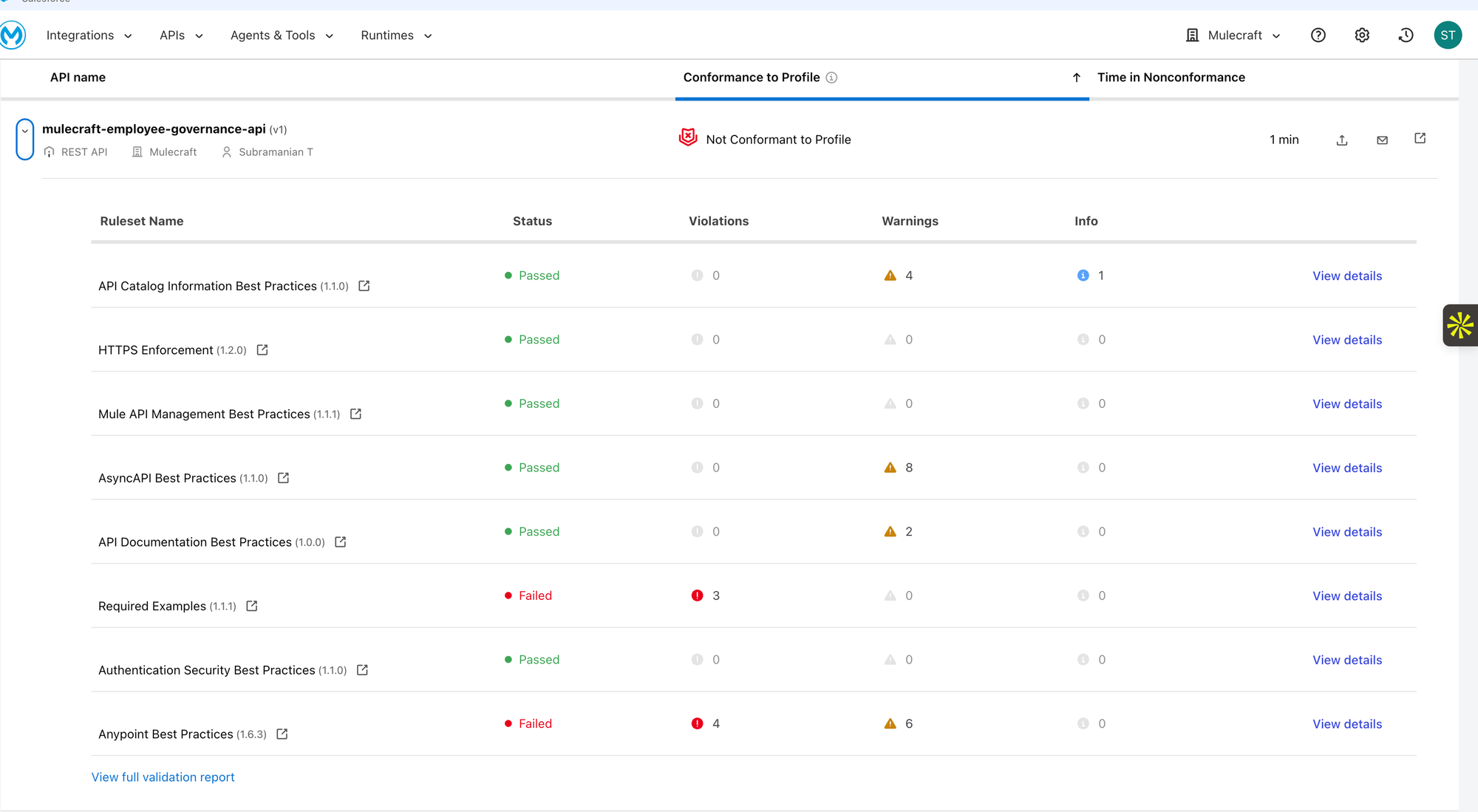
Validate APIs against defined standards and identify issues.
Once the API is published to Exchange:
- Governance automatically evaluates it
- Violations are displayed in the console
Example violations:
- Missing required headers
- Naming convention mismatches
- Incomplete response definitions
Fix process:
- Update the RAML
- Republish to Exchange
- Revalidate in Governance Console
Step 5: Monitor and Improve
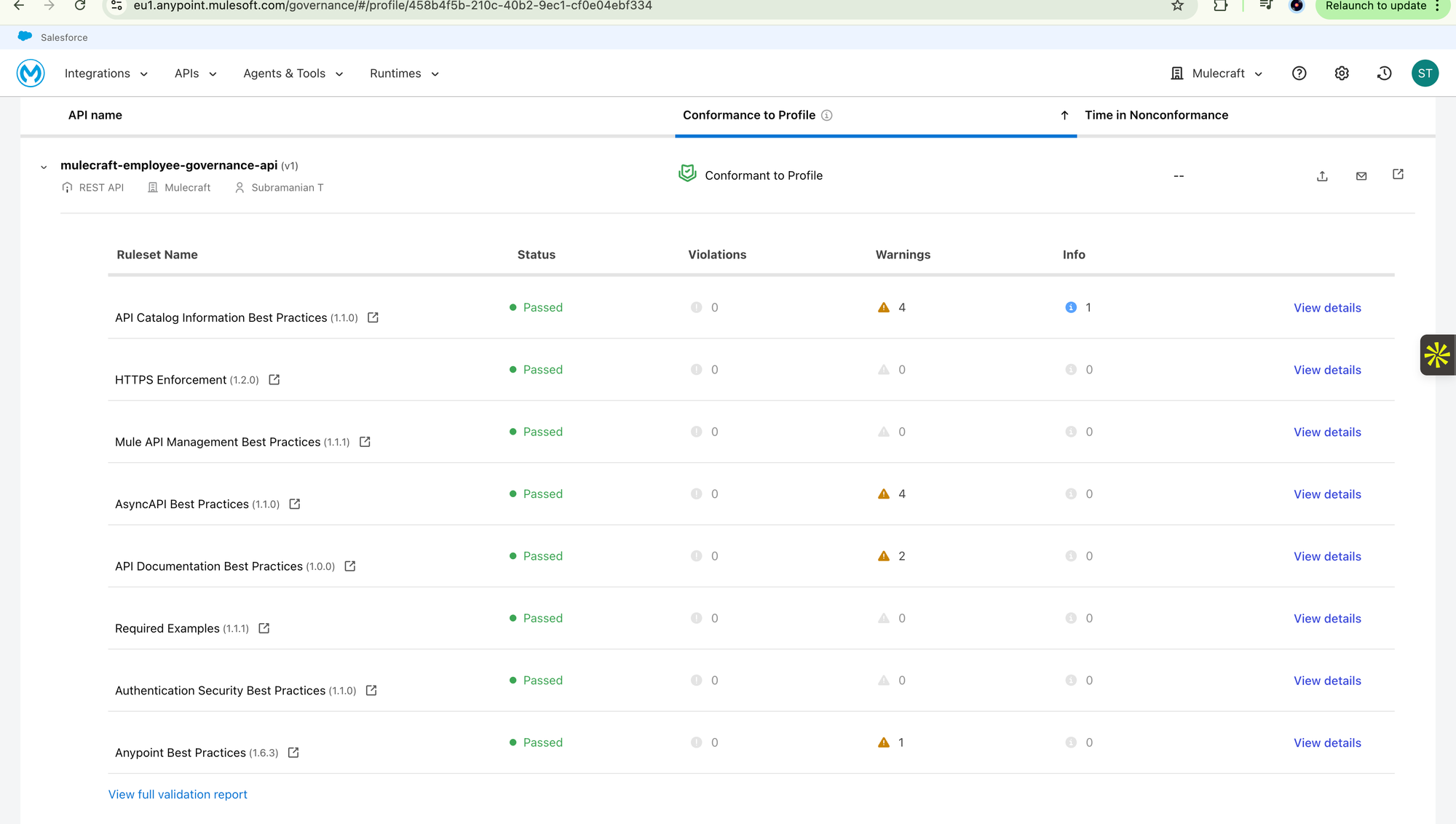
Continuously maintain API quality and compliance.
- Track API conformance
- Resolve violations
- Update rules as needed
Common Pitfalls (Solved by Governance)
| Problem | Without Governance | With Governance |
|---|---|---|
| Naming inconsistencies | /getEmployee, /fetch_user | Standardized /employees |
| Security gaps | Missing authentication | Enforced policies |
| Response formats | Different structures | Consistent models |
| API duplication | Hard to reuse | Easily discoverable |
Conclusion
Implementing API Governance in MuleSoft ensures APIs are built with consistency, security, and scalability from the start.
By combining well-defined API specifications, publishing to Exchange, and enforcing governance rules through profiles, organizations can significantly improve API quality while reducing development effort.
FAQs
When should API Governance be introduced?
At the API design stage for maximum effectiveness
Does governance block deployment?
No, it highlights violations; enforcement depends on your process
Can governance be applied to existing APIs?
Yes, but start with less strict rules to avoid disruption